Category: Nova Travel BD

  • Japan, Korea or Taiwan: A Complete Guide to Booking Train Tickets on Klook

    Japan, Korea or Taiwan: A Complete Guide to Booking Train Tickets on Klook

    Planning a trip around Japan, South Korea or Taiwan sounds exciting—until you start figuring out train tickets.

    Which train should you choose? Do you need a rail pass? Should you book before arriving? And is an e-ticket enough to board?

    For many international travelers, platforms like Klook can make the process easier by bringing different train and rail products into one place. Klook currently offers train and rail-pass options across Japan, South Korea and Taiwan, including KTX and Taiwan High Speed Rail products.

    Here’s how to approach your booking without making it unnecessarily complicated.

    Japan: When You Need Shinkansen or Regional Train Tickets

    Japan is famous for its Shinkansen, but not every journey requires a bullet train.

    If your itinerary includes major cities such as Tokyo, Kyoto, Osaka or Hiroshima, a high-speed train may be the most convenient option for certain long-distance routes. Japan also has numerous regional trains and tourist-focused rail products.

    When searching for Japan train tickets on Klook, first check:

    • Departure and arrival stations
    • Travel date and departure time
    • Train type
    • Reserved or applicable seating options
    • Whether a rail pass makes sense for your itinerary

    For example, the Tokaido Shinkansen connects major destinations including Tokyo, Kyoto and Shin-Osaka. Official JR information also confirms that online Shinkansen reservations are available for eligible routes.

    Useful long-tail search: how to book Japan train tickets on Klook

    The important point is simple: don’t automatically buy a nationwide rail pass just because you’re visiting Japan. Compare the actual journeys in your itinerary first.

    South Korea: KTX Makes City-to-City Travel Easy

    South Korea is particularly straightforward for travelers who want to move between major cities by train.

    KTX is the key option for routes such as Seoul to Busan, while other services connect Seoul with destinations including Daegu, Gyeongju, Jeonju and Gangneung. Klook currently lists several of these routes.

    When looking for KTX tickets on Klook, enter your departure city, destination and travel date. Then compare the available departures before selecting the one that fits your itinerary.

    Klook’s current Korea rail information says eligible tickets can be booked up to three months ahead and that travelers can board using the Klook e-ticket without collecting a physical ticket.

    A common mistake

    Don’t confuse KTX with every high-speed rail service in Korea. Klook specifically notes that its Korea rail booking does not include SRT, although it covers KTX and several other train types.

    So always check the exact train type before paying.

    Taiwan: THSR or Regular Railway?

    Taiwan gives travelers another useful choice.

    If you’re traveling between major cities quickly, Taiwan High Speed Rail (THSR) can be an attractive option. For slower regional journeys and destinations away from the main high-speed corridor, Taiwan Railway may be more appropriate.

    Klook currently lists both Taiwan High Speed Rail tickets and THSR passes, while Taiwan Railway has separate booking and ticket-collection procedures.

    That means your first question shouldn’t be “Which ticket is cheapest?”

    Instead ask:

    “Which railway matches my route?”

    For example, a traveler planning several high-speed journeys may want to compare a THSR pass with individual tickets. Someone taking a scenic or regional journey may need Taiwan Railway instead.

    Useful long-tail search: how to book Taiwan High Speed Rail tickets on Klook

    Klook Train Booking: What Should You Check?

    Before clicking the payment button, spend a minute checking these details:

    1. Correct stations – Large cities can have multiple stations.
    2. Travel date – Make sure the date matches your itinerary.
    3. Departure time – Leave enough time if you’re connecting from a flight or another train.
    4. Passenger details – Enter names and passport information exactly as required.
    5. Ticket type – Check whether you’re buying a single journey, return ticket or rail pass.
    6. Seat information – Understand whether seat selection is included or handled differently.
    7. Redemption instructions – Don’t assume every country uses the same boarding process.

    This last point is especially important because Japan, Korea and Taiwan don’t necessarily handle railway tickets in exactly the same way.

    Should You Book Train Tickets on Klook Before Your Trip?

    For popular routes and fixed travel dates, booking ahead can make itinerary planning easier.

    However, the ideal booking window depends on the railway and ticket type.

    For example, Klook’s current Korea rail information allows bookings up to three months in advance, while its Taiwan Railway product has different booking and collection rules.

    So don’t use one booking rule for all three countries.

    Instead, check the specific product’s availability, cancellation policy, seat information and redemption instructions before purchasing.
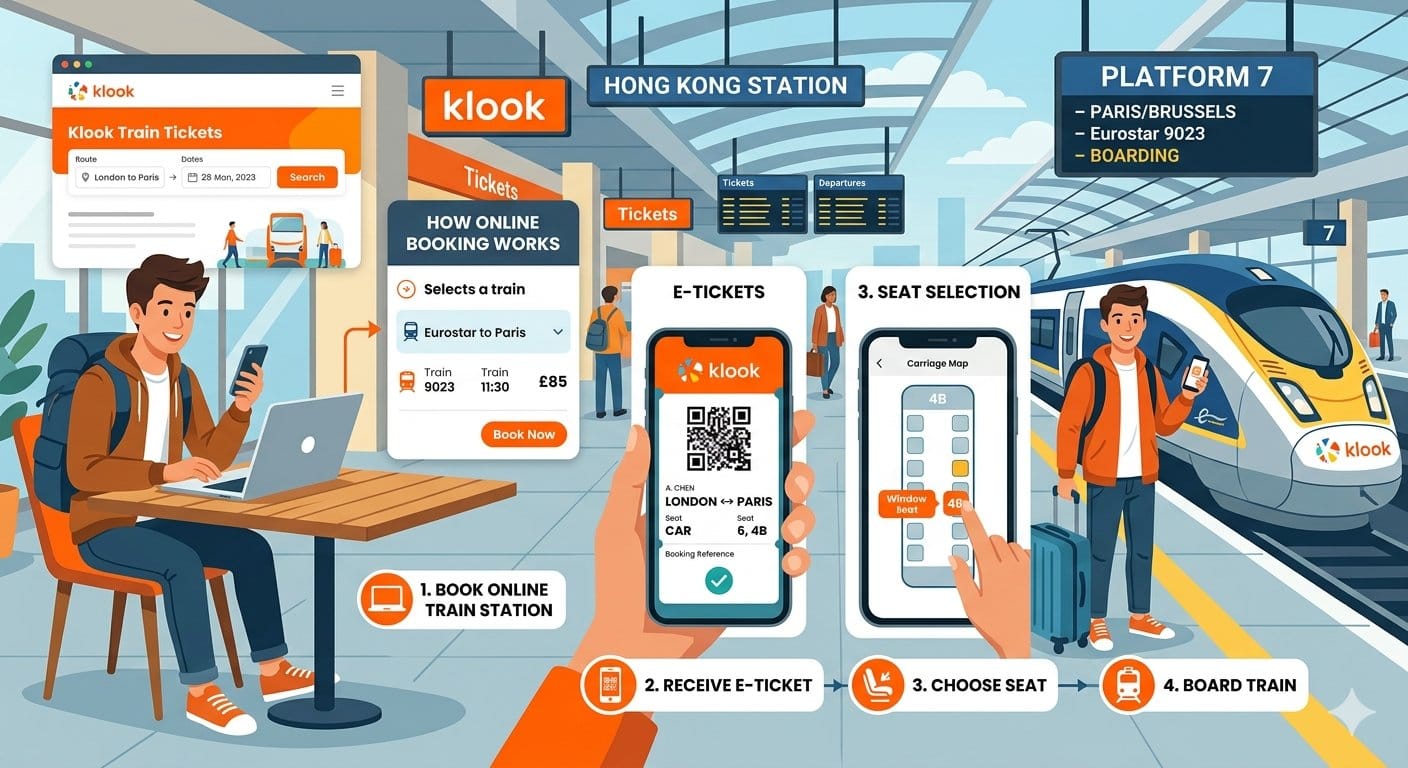
  • Klook Train Tickets: How Online Booking Works, E-Tickets, Seat Selection and Boarding

    Klook Train Tickets: How Online Booking Works, E-Tickets, Seat Selection and Boarding

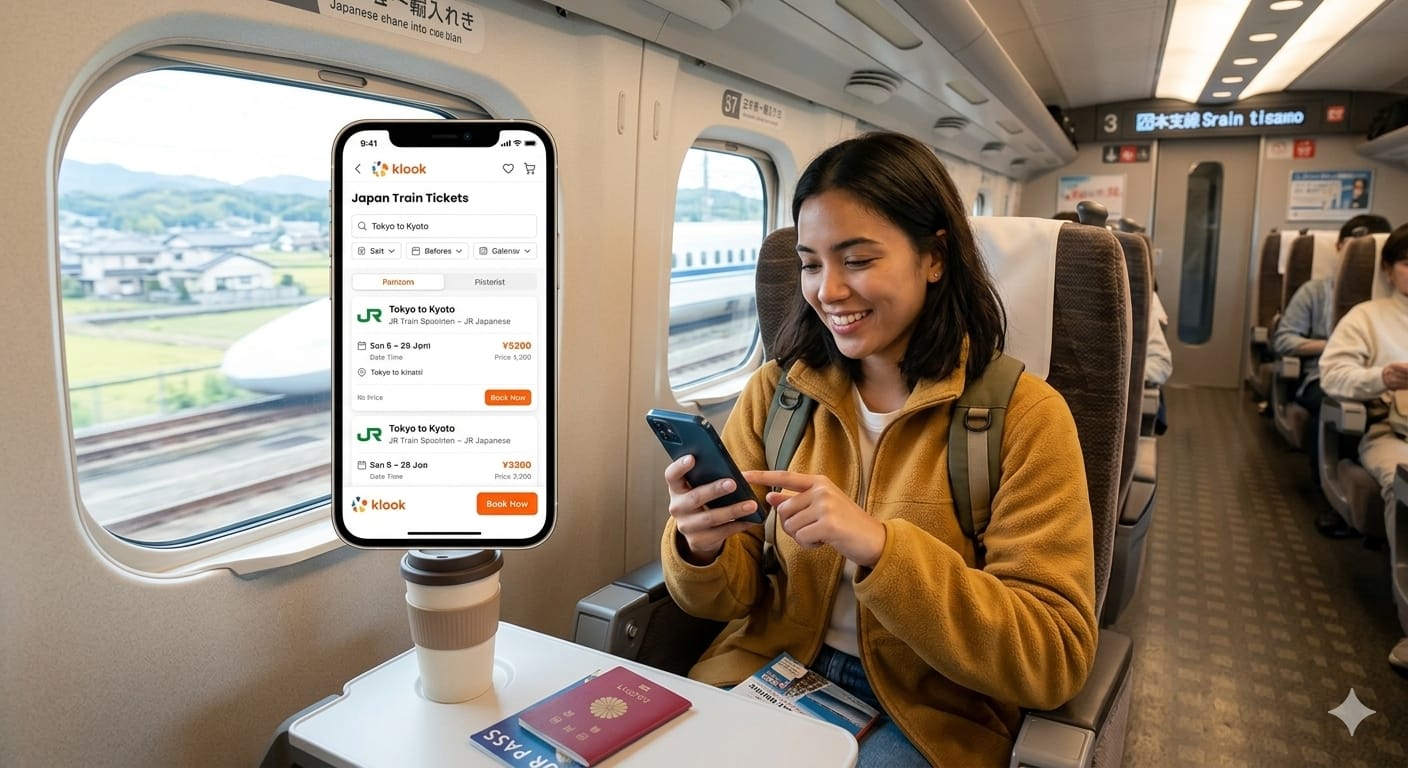
    Booking train tickets online can make travel much easier, especially when you are visiting a country where you do not speak the local language. For many international travelers, Klook provides a convenient way to search for train routes, compare available departures and receive booking information online.

    But there are a few things worth understanding before you book. An e-ticket does not always work the same way in every country, and seat selection can also vary depending on the railway and ticket type.

    Here is a practical guide to how Klook train ticket booking works and what you should check before your journey.

    Start by Searching Your Route

    The first step is simple: enter your departure location, destination and travel date on the relevant Klook train booking page.

    Depending on the country and railway, you may see different types of trains, departure times and ticket classes. Klook currently offers train products covering destinations including Japan, South Korea, Taiwan, Thailand and other regions.

    Before selecting a ticket, check the departure station carefully. Large cities can have more than one major railway station, and choosing the wrong station can create unnecessary problems on travel day.

    Check the Train and Ticket Type Carefully

    Once you see the available services, compare the departure time, journey details and ticket type.

    For some high-speed rail bookings, Klook’s booking process asks you to select your departure, destination, preferred train and seat type before entering passenger information and completing payment.

    Do not look only at the price.

    Also check:

    • Train name or service number
    • Departure station
    • Arrival station
    • Departure date and time
    • Passenger information requirements
    • Seat or class information
    • Ticket collection or e-ticket instructions
    • Cancellation and refund conditions

    These details can differ between railway systems.

    What Is a Klook E-Ticket?

    A Klook e-ticket is your digital proof of the train booking. Depending on the specific railway, you may be able to show the digital ticket directly when boarding.

    For example, Klook’s current Korea rail guidance says travelers can board directly using their Klook e-ticket without collecting a physical ticket. The ticket should be available when train staff request it.

    However, you should not assume that every train works in exactly the same way.

    Some Japan rail products, for example, may involve additional ticket collection or physical-ticket procedures depending on the service. Klook’s own Japan train instructions show that certain tickets may need to be collected from a machine.

    So after payment, always read the voucher instructions rather than relying only on the general idea of an e-ticket.

    Can You Choose Your Seat?

    This is one of the most important things to understand.

    Seat selection depends on the specific train product.

    Klook’s general train FAQ currently says that some train bookings automatically assign seats and do not allow customers to select a preferred seat.

    Taiwan High Speed Rail is one example where Klook states that a seat is automatically assigned after the booking is confirmed, but the traveler cannot choose or change the seat number.

    Other train products can have different procedures, so check the booking page before payment if sitting together or choosing a particular seat is important to you.

    If you are traveling with family or friends, do not assume that multiple tickets automatically guarantee adjacent seats.

    Reserved vs Non-Reserved Seats

    Some train systems offer both reserved and non-reserved seating.

    A reserved seat means a specific seat is guaranteed for your journey. A non-reserved ticket generally gives you more flexibility but does not guarantee a particular seat. Klook explains that non-reserved seats are normally available on a first-come, first-served basis.

    For longer journeys, families or travelers carrying luggage, knowing which type of ticket you are purchasing can make a significant difference.

    What Happens After Payment?

    After completing your booking, check your Klook account and confirmation information.

    Do not wait until the last minute to inspect the voucher.

    Look for:

    Booking confirmation → Train details → Passenger information → Seat/carriage → Boarding instructions

    If the booking provides a QR code or digital ticket, make sure you know where to find it.

    It is also sensible to keep your phone charged on travel day. If the railway requires the original digital ticket or a particular voucher, you do not want to discover a problem when you are already at the station.

    What Should You Do at the Station?

    Give yourself enough time before departure.

    For Korea rail bookings, Klook currently recommends arriving at least 15 minutes before departure and checking the station departure screens for the train, destination and platform.

    A simple routine works well:

    1. Find the departure board

    Check the train number, destination and departure time.

    2. Confirm the platform

    Large stations can have several platforms, so do not follow another train simply because it is leaving around the same time.

    3. Check your carriage and seat

    If your ticket contains a car and seat number, match them carefully.

    4. Keep your ticket accessible

    Open the Klook booking or e-ticket before boarding.

    5. Follow the railway’s instructions

    Some stations have ticket gates, while others may use different boarding procedures.

    What If Your Plans Change?

    This is another area where travelers should read the ticket conditions before booking.

    Klook’s Korea train policy, for example, states that changes generally require canceling the existing booking and making a new booking, with cancellation fees depending on how close the cancellation is to departure.

    The exact rules can vary by country, railway and product.

    Therefore, if your itinerary is uncertain, check the cancellation and refund policy before completing payment.

    A slightly cheaper ticket is not necessarily useful if it has restrictions that do not fit your travel plans.

    A Simple Pre-Boarding Checklist

    Before leaving for the station, check these five things:

    ✓ Date — Is the booking for today’s journey?

    ✓ Station — Are you going to the correct departure station?

    ✓ Time — Have you allowed enough time to reach the platform?

    ✓ Ticket — Can you access your Klook e-ticket or voucher?

    ✓ Seat — Do you know your carriage and seat number, if assigned?

    This quick check can prevent many avoidable travel problems.

    Klook Train Tickets: What Travelers Should Remember

    Klook can make online train booking easier, but the exact process is not identical for every railway.

    The most important thing is to read the instructions attached to your specific booking.

    Some services allow direct boarding with an e-ticket, while others may require ticket collection. Some automatically assign seats, while others provide different seat options.

    So before you pay, check the route, station, train, ticket type and cancellation conditions. After booking, check your voucher and keep the necessary travel information easily accessible.

    With those simple steps, booking a train online can become much more straightforward—even if it is your first time traveling by rail in Japan, Korea, Taiwan or Thailand.

    Final Thoughts

    Klook train tickets can be useful for travelers who want to arrange railway journeys online before arriving at their destination. The key is not simply finding a train and paying for it. You should understand exactly what your ticket includes and what you need to do on travel day.

    Check the booking details, understand the e-ticket instructions, confirm how seats are assigned and arrive at the station with enough time.

    A few minutes of preparation before your journey can make the actual train ride much more relaxed.

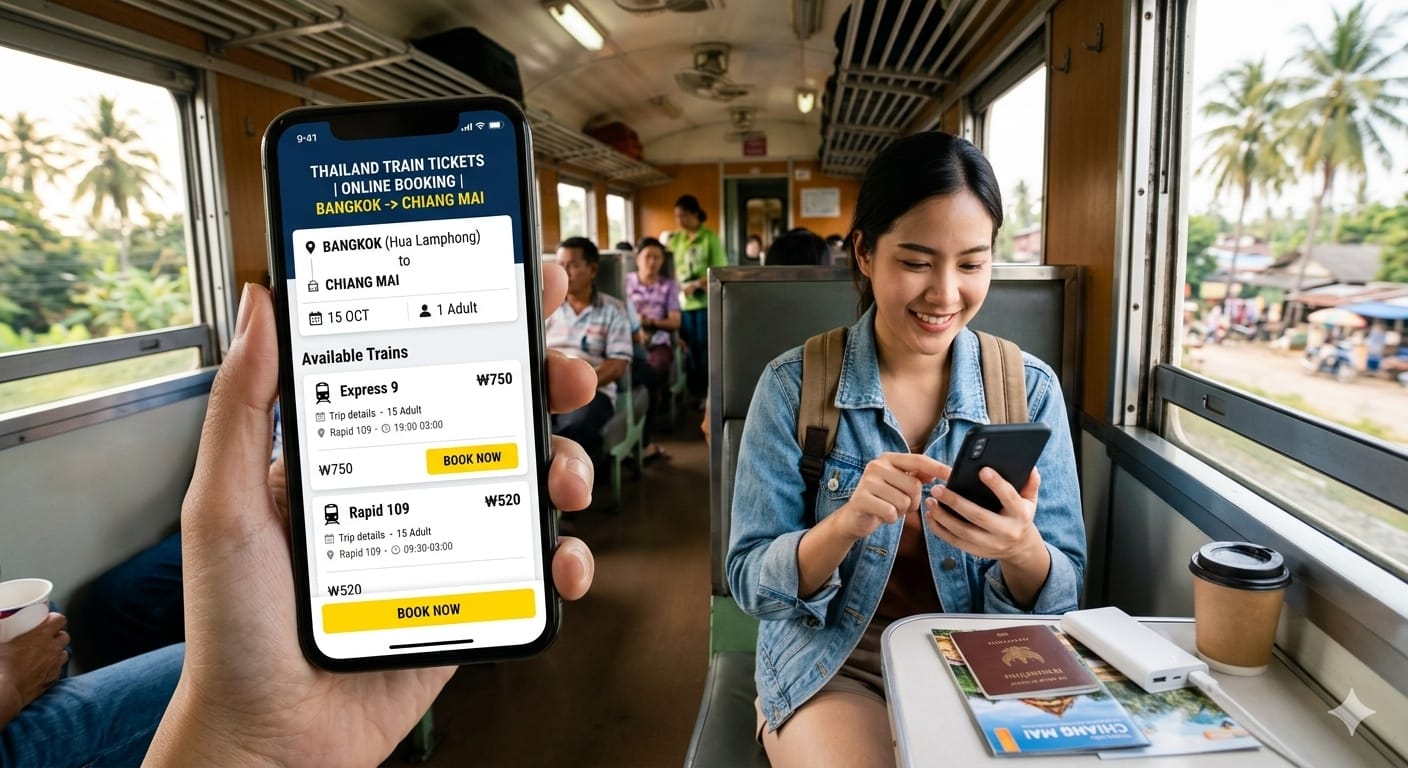
  • Thailand Train Tickets Online: How to Book Bangkok to Chiang Mai and Other Routesall to Action Headline

    Thailand Train Tickets Online: How to Book Bangkok to Chiang Mai and Other Routesall to Action Headline

    TThailand is well known for its beaches, temples, street food and busy cities, but traveling around the country by train can be an enjoyable part of the journey too.

    For travelers moving between Bangkok, Chiang Mai, Ayutthaya and other destinations, trains offer another way to experience Thailand beyond the usual flights and buses.

    If you are planning to book your journey online, understanding the route, train type and ticket rules before you travel can make the process much easier.

    Popular Train Routes in Thailand

    Thailand has several useful routes for tourists.

    Some of the most popular include:

    • Bangkok to Chiang Mai
    • Bangkok to Ayutthaya
    • Bangkok to Hua Hin
    • Bangkok to Surat Thani

    Your best option will depend on where you are going and how much time you have.

    For a longer journey such as Bangkok to Chiang Mai, an overnight train can also be an interesting alternative to flying.

    Bangkok to Chiang Mai by Train

    Bangkok and Chiang Mai are connected by Thailand’s northern railway route.

    The journey is much longer than a domestic flight, but that is part of the appeal for some travelers. An overnight service can allow you to travel while sleeping and arrive in Chiang Mai the following day.

    When comparing services, pay attention to the departure time, arrival time and sleeping or seating arrangement.

    If you prefer to sleep during the journey, check whether your selected service offers a sleeper option.

    Bangkok to Ayutthaya

    Ayutthaya is much closer to Bangkok and is one of the easiest destinations to include in a Thailand itinerary.

    Because the journey is relatively short, travelers often visit Ayutthaya as a day trip from Bangkok.

    Before booking, check your departure station and train schedule carefully. Different services may have different travel times and stopping patterns.

    If your main goal is sightseeing, choose a departure that gives you enough time to explore Ayutthaya before returning to Bangkok.

    How to Book Thailand Train Tickets Online

    The basic process is simple.

    1. Choose Your Route

    Decide where you are traveling from and where you want to go.

    For example:

    Bangkok → Chiang Mai

    or

    Bangkok → Ayutthaya

    2. Select Your Travel Date

    Choose the date that fits your itinerary.

    For overnight journeys, pay particular attention to the departure date because the train may arrive at your destination the following morning.

    3. Compare Available Services

    Look at departure time, arrival time, journey duration and available seat or sleeper options.

    Don’t choose based only on price.

    A slightly more expensive option may provide a much more convenient schedule or sleeping arrangement.

    4. Check Your Ticket Instructions

    After booking, carefully read the confirmation and ticket instructions.

    Check whether your ticket is an e-ticket, requires collection or has any specific boarding instructions.

    Keep the booking information accessible on your phone during your journey.

    Sleeper or Seat?

    For long-distance Thailand train journeys, this is an important decision.

    A normal seat can be suitable for shorter journeys.

    For overnight travel, a sleeper can be much more comfortable because you can rest during the journey instead of sitting for several hours.

    If you are traveling during a busy period, check availability early because popular sleeper services can fill up.

    Don’t Forget the Station

    Bangkok’s railway system has changed significantly with the opening of Krung Thep Aphiwat Central Terminal for long-distance services.

    So don’t simply search for “Bangkok train station” and assume you know where to go.

    Always check the exact departure station shown on your ticket before leaving your hotel.

    Arriving at the wrong station can turn a simple journey into a stressful one.

    A Few Smart Tips

    Before your Thailand train journey:

    • Check the exact departure station.
    • Confirm the travel date.
    • Check whether the train is daytime or overnight.
    • Review your seat or sleeper type.
    • Keep your ticket details available.
    • Arrive at the station with enough time.
    • Carry water and basic travel essentials for longer journeys.

    For overnight trips, a small travel pillow, light jacket and earplugs can also make the journey more comfortable.

    Final Thoughts

    Thailand’s railway network can be a useful part of a longer Southeast Asia itinerary.

    For short trips such as Bangkok to Ayutthaya, a train can be a convenient way to explore beyond the capital. For longer journeys such as Bangkok to Chiang Mai, an overnight service can turn travel time into part of the experience.

    The key is to choose your route first, check the current schedule and understand exactly how your ticket works before heading to the station.

    With a little preparation, traveling around Thailand by train can be simple, comfortable and memorable.

    Next guide: Klook Train Tickets: How Online Booking Works, E-Tickets, Seat Selection and Boarding.

  • Japan Rail Pass vs Individual Train Tickets: How to Choose for Your Itinerary

    Japan Rail Pass vs Individual Train Tickets: How to Choose for Your Itinerary

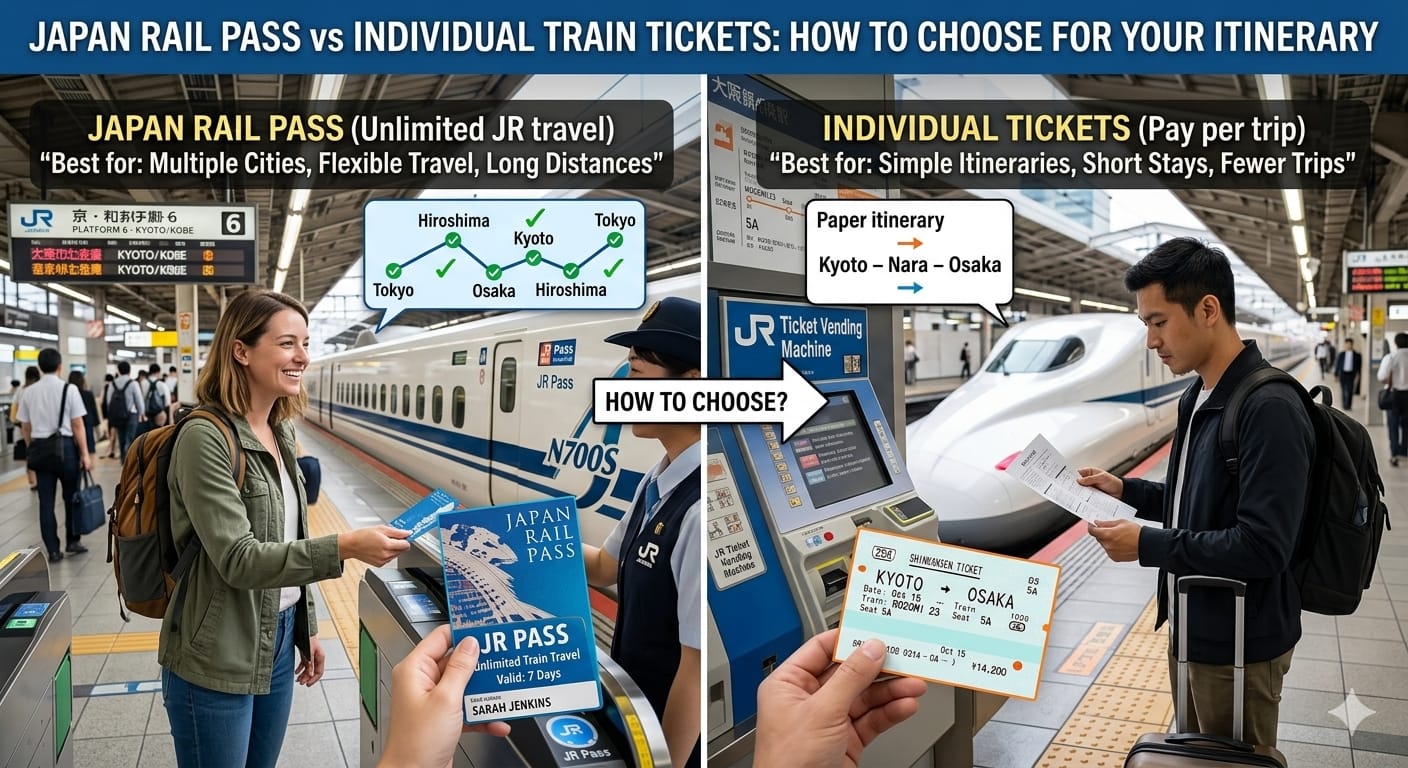
    Planning to travel around Japan by train? One of the biggest questions is whether you should buy a Japan Rail Pass or simply purchase individual train tickets for each journey.

    There is no single option that works for every traveler. The right choice depends mainly on how many cities you plan to visit, how often you will use long-distance trains, and how flexible your itinerary is.

    Here is a simple way to compare the two.

    What Is the Japan Rail Pass?

    The Japan Rail Pass is a multi-day pass designed for eligible foreign visitors. The nationwide pass is available for 7, 14 or 21 consecutive days and covers many JR trains across Japan.

    It can be useful for travelers planning several long-distance journeys within a relatively short period.

    For example, an itinerary such as:

    Tokyo → Kyoto → Osaka → Hiroshima → Tokyo

    involves several intercity journeys. A nationwide rail pass may be worth considering when your itinerary contains multiple covered JR trips.

    When Individual Tickets Make More Sense

    If your trip is relatively simple, buying tickets separately can be easier.

    Imagine your itinerary is:

    Tokyo → Kyoto → Osaka

    and you spend several days exploring each city without taking many additional long-distance JR trains.

    In this situation, you may not need a nationwide pass. Instead, you can book the specific Shinkansen or JR journeys you actually need.

    Klook currently also offers point-to-point Japan rail bookings, allowing travelers to search individual routes and schedules.

    Don’t Compare Only the Number of Travel Days

    A common mistake is thinking that a longer Japan trip automatically means a JR Pass is better.

    It doesn’t.

    What matters is how much long-distance train travel is inside those days.

    A 10-day trip with only two major train journeys is very different from a 10-day trip covering five or six cities.

    So before buying a pass, write down your planned train journeys first.

    Think About Your Travel Style

    The JR Pass can be useful when your itinerary involves frequent JR travel and you want one pass covering multiple journeys.

    Individual tickets can be more straightforward when your plans are limited to a few specific routes.

    For example:

    City-focused trip:
    Tokyo → Kyoto → Osaka

    Multi-city trip:
    Tokyo → Kyoto → Hiroshima → Fukuoka → Tokyo

    The second itinerary involves considerably more long-distance travel, so a rail pass becomes more relevant to investigate.

    Check the Current Price Before Buying

    Japan Rail Pass pricing has changed significantly in recent years.

    The official JR Pass information currently lists the nationwide Ordinary Pass at ¥50,000 for 7 days, ¥80,000 for 14 days and ¥100,000 for 21 days.

    However, JR Group has announced a price change for purchases made through overseas agencies from October 1, 2026, while online purchasing prices remain unchanged in that announcement.

    Because prices and booking conditions can change, always check the current price before making your final decision.

    Remember That Not Every Train Is Covered

    A Japan Rail Pass does not mean every railway service in Japan is automatically included.

    The nationwide pass covers eligible JR services, while some private railway lines and other transportation services are outside its coverage.

    There are also specific rules for certain Shinkansen services. For example, using Nozomi or Mizuho with a JR Pass requires an additional special ticket.

    That is why your actual route matters more than simply counting the number of travel days.

    A Simple Way to Decide

    Before buying anything, make a quick list:

    1. Where will you travel?
    Write down every city on your itinerary.

    2. How many long-distance train journeys will you make?
    Focus on the journeys between cities rather than local subway rides.

    3. Which railway operates each journey?
    Check whether the service is covered by the pass.

    4. What is the current pass price?
    Compare it with the individual fares for your planned journeys.

    5. Do you value flexibility?
    A pass can be convenient for a multi-city itinerary, while individual tickets may be simpler for a more fixed route.

    Final Thoughts

    Choosing between the Japan Rail Pass and individual train tickets should start with your itinerary, not with the pass itself.

    If you are visiting only a few cities and have limited long-distance travel, individual tickets may be easier to plan.

    If your journey covers several regions with multiple JR trips, a nationwide or regional rail pass may deserve a closer look.

    The best approach is simple: plan your routes first, check current prices and coverage, then choose your ticket option.

    That way, you are paying for the travel you actually expect to use rather than choosing a pass simply because it sounds convenient.

    Next guide: Thailand Train Tickets Online: How to Book Bangkok to Chiang Mai and Other Routes.

  • Tokyo to Kyoto by Train: How to Book Shinkansen Tickets and What to Know

    Tokyo to Kyoto by Train: How to Book Shinkansen Tickets and What to Know

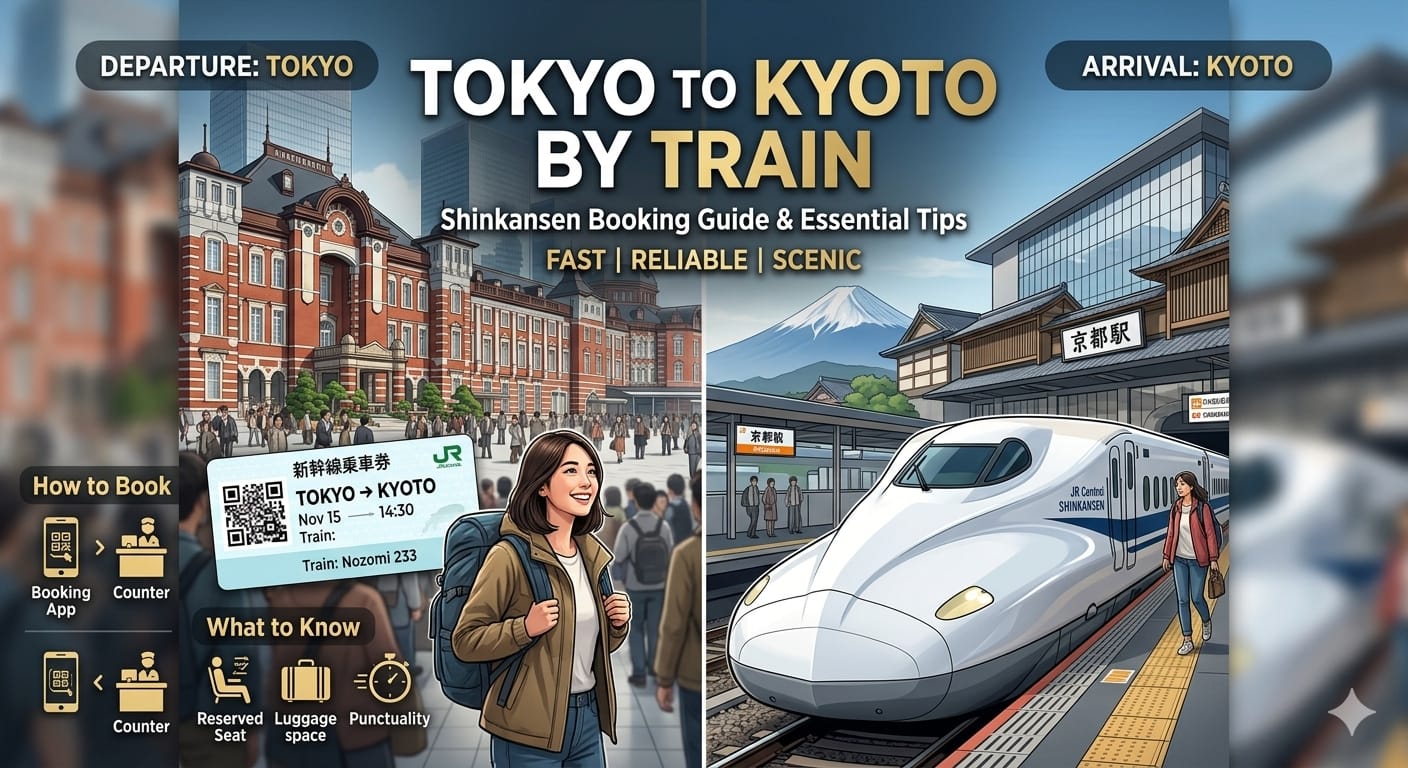
    Traveling from Tokyo to Kyoto is one of the most popular train journeys in Japan. Instead of spending hours on the road or taking a domestic flight, many travelers choose the Shinkansen for a simple city-to-city journey.

    The Tokaido Shinkansen directly connects Tokyo, Kyoto and Osaka, making it an important part of Japan’s popular travel route.

    If you are planning to book your Tokyo to Kyoto train ticket online, here are the main things to know.

    How Long Does Tokyo to Kyoto Take?

    The journey can take around 2 hours, depending on the train service and departure. Klook currently lists direct Tokyo-to-Kyoto Shinkansen services with no transfers, while exact journey times vary by train.

    That makes the Shinkansen particularly convenient if you want to spend more of your trip exploring Kyoto rather than traveling.

    Which Shinkansen Should You Choose?

    The Tokaido Shinkansen operates different services, including Nozomi, Hikari and Kodama.

    They differ mainly in the number of stations they stop at.

    For travelers who want a faster journey, Nozomi is generally the quickest option. Hikari makes more stops, while Kodama stops at every station along the route.

    For a simple Tokyo-to-Kyoto itinerary, check the departure time and total journey duration before choosing your train.

    How to Book Tokyo to Kyoto Tickets on Klook

    Booking is straightforward:

    Step 1 — Choose Tokyo as your departure point

    Depending on the available service, you may see Tokyo Station or Shinagawa Station as departure options.

    Step 2 — Select Kyoto

    Make sure the destination is Kyoto Station rather than another nearby location.

    Step 3 — Pick your travel date

    Choose the date that matches your Japan itinerary.

    Step 4 — Select your train

    Compare departure time, journey duration and available ticket types.

    Step 5 — Choose your seat

    Depending on availability, options can include Ordinary Car and Green Car, with reserved or non-reserved seating.

    Step 6 — Check the ticket instructions

    Klook currently shows QR-code boarding for eligible Tokyo-to-Kyoto services, but always follow the specific instructions attached to your booking.

    Where Should You Sit?

    If you enjoy scenery, your seat can make the journey more interesting.

    Travelers heading from Tokyo toward Kyoto or Osaka may have a chance to see Mount Fuji from the right side of the train when weather and visibility are suitable. JR Central notes that seat E in Ordinary Cars and seat D in Green Cars can offer this view.

    Of course, Mount Fuji is not guaranteed to be visible because weather conditions can change.

    What About Large Luggage?

    If you are traveling with a large suitcase, check the oversized-luggage rules before your journey.

    Some Tokaido Shinkansen services require passengers with oversized baggage to reserve an appropriate luggage space.

    This is especially useful to remember if you are traveling with several bags after an international flight.

    Tokyo to Kyoto: A Simple Booking Checklist

    Before confirming your ticket, check:

    • Departure station
    • Kyoto Station as your destination
    • Travel date
    • Departure time
    • Train type
    • Seat type
    • Luggage requirements
    • QR-code or ticket collection instructions

    These small checks can make your journey much easier.

    Final Thoughts

    Tokyo to Kyoto by Shinkansen is a straightforward way to connect two of Japan’s most popular destinations.

    The key is not simply finding a train, but choosing a departure time, seat and ticket type that fit your itinerary.

    If you book through Klook, review the exact ticket instructions before traveling and keep your booking information easily accessible.

    Once your train is sorted, you can focus on the more enjoyable part of the trip—exploring Kyoto.

    Next guide: Japan Rail Pass vs Individual Train Tickets: How to Choose for Your Itinerary.

  • Japan Train Tickets on Klook: A Beginner’s Guide to Booking JR Trains

    Japan Train Tickets on Klook: A Beginner’s Guide to Booking JR Trains

    Planning a trip to Japan? Trains are one of the easiest ways to travel between major cities, but Japan’s railway system can feel confusing if you are visiting for the first time.

    From Shinkansen bullet trains to regular JR services, there are several options to understand before booking.

    If you want to arrange your train tickets before arriving in Japan, Klook can be one option for checking available routes and booking eligible train journeys online.

    Here is a simple guide to help you get started.

    Understand Japan’s Main Train Options

    Japan has an extensive railway network, but not every train is designed for long-distance travel.

    For journeys between major cities, Shinkansen is often the most convenient choice. These high-speed trains connect destinations such as Tokyo, Kyoto, Osaka and other major areas.

    JR trains also operate many regional and local services, so the best ticket depends on your actual itinerary.

    Before booking, first decide where you are leaving from, where you are going and when you want to travel.

    How to Book Japan Train Tickets on Klook

    The booking process is relatively straightforward.

    1. Choose Your Route

    Start by entering your departure and destination.

    For example:

    • Tokyo to Kyoto
    • Tokyo to Osaka
    • Kyoto to Hiroshima
    • Osaka to Tokyo

    Make sure you select the correct station, especially in large cities where several stations may serve different train services.

    2. Select Your Travel Date

    Choose the date of your journey and review the available options.

    If your schedule is fixed, checking availability early can make planning easier, particularly during busy travel periods.

    3. Compare Train Times

    Don’t choose a train only because it is the cheapest option.

    Check the departure time, arrival time, journey duration and ticket conditions before confirming your booking.

    A slightly different departure may fit your itinerary much better.

    Choosing the Right Seat

    Depending on the train and ticket, you may see different seating options.

    Ordinary Class is suitable for most travelers, while Green Car provides a more premium seating experience.

    You may also encounter reserved and unreserved seating depending on the service.

    If you want the security of having a specific seat, a reserved-seat option can be useful.

    Always check the exact conditions shown for your selected ticket before paying.

    Don’t Ignore the Luggage Rules

    Traveling with a large suitcase?

    Check the luggage rules before booking.

    Some Shinkansen services have specific requirements for oversized baggage, and certain large pieces may require a designated luggage area or reservation.

    This is particularly important if Japan is one stop on a longer international trip and you are carrying full-size luggage.

    What Happens After Booking?

    After completing your booking, carefully read the ticket instructions.

    Depending on the route and ticket type, you may receive an electronic ticket or QR code, while some bookings may require physical ticket collection.

    Do not assume that every Japan train ticket works in exactly the same way.

    Check the How to Use, redemption or boarding instructions provided with your booking before leaving for the station.

    Klook or Direct JR Booking?

    Klook is not the only way to book Japan train tickets.

    Japan Railways also operates official reservation services for different regions.

    The advantage of using an online travel platform such as Klook is that international travelers can search and organize eligible journeys through a familiar booking interface.

    However, the right option depends on your route, ticket conditions, cancellation rules and travel plans.

    A Simple Checklist Before You Book

    Before confirming your Japan train ticket, check these details:

    • Correct departure station
    • Correct destination
    • Travel date
    • Departure time
    • Train type
    • Seat type
    • Luggage requirements
    • Ticket collection or QR-code instructions

    Taking a few extra minutes to check these details can prevent unnecessary problems at the station.

    Final Thoughts

    Booking Japan train tickets becomes much easier when you plan your route first and choose your ticket based on your actual itinerary.

    Klook can be useful for checking and booking eligible Japan train journeys online, but always read the specific ticket instructions before traveling.

    Whether you are taking a Shinkansen from Tokyo to Kyoto or connecting several cities during your Japan trip, a little preparation can make the journey much smoother.

    Next guide: Tokyo to Kyoto by Train: How to Book Shinkansen Tickets and What to Know Before You Travel.

  • KORAIL Pass vs KTX Single Ticket: Which Is Better for Korea Travel?

    KORAIL Pass vs KTX Single Ticket: Which Is Better for Korea Travel?

    South Korea is easy to explore by rail, especially when your itinerary includes major cities such as Seoul, Busan, Daegu, Daejeon or Gyeongju.

    But there is one decision travelers often face before booking their trains:

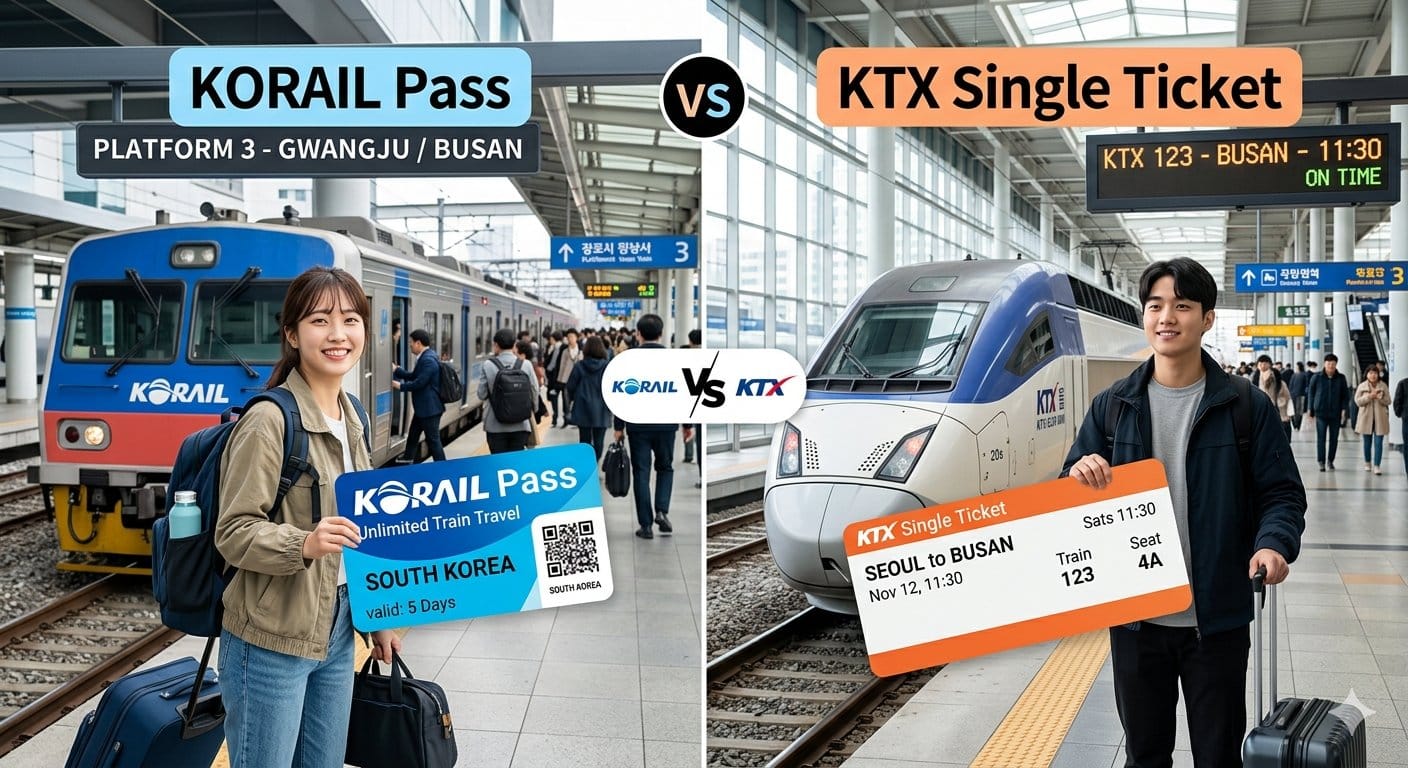
    Should you buy a KORAIL Pass, or should you simply book individual KTX tickets?

    The answer depends on your itinerary. A rail pass can be useful for travelers making several train journeys, while individual tickets may be more practical when your route is short and fixed.

    Start With Your Itinerary

    Before choosing a ticket type, write down every long-distance train journey you expect to make.

    For example:

    Seoul → Busan → Seoul

    is very different from:

    Seoul → Busan → Daegu → Daejeon → Seoul

    The second itinerary involves several rail journeys, so a pass becomes more relevant.

    The key is to plan the route first and choose the ticket afterward.

    What Exactly Is a KORAIL Pass?

    The KORAIL Pass is a rail pass designed for eligible foreign visitors to Korea. It allows travel on KORAIL-operated trains according to the conditions of the selected pass. KORAIL’s current official information lists 2-, 3-, 4- and 5-day pass options.

    The pass is therefore more closely connected to a multi-city Korea itinerary than to a single journey.

    If you are moving between several destinations within a short period, having a pass can make your train planning more flexible.

    However, remember that the KORAIL Pass does not cover every rail service in Korea. KORAIL’s official guidance specifically excludes services such as SRT and some other rail categories.

    That is why checking your exact train route before buying is important.

    When Individual KTX Tickets Can Make More Sense

    Imagine your entire rail plan is simply:

    Seoul → Busan

    and then you spend several days in Busan.

    In that situation, you may not need a multi-day rail pass at all.

    An individual KTX ticket lets you pay for the journey you actually need instead of purchasing a pass for travel you may not use.

    The same logic applies if you have only one or two long-distance train journeys during your Korea vacation.

    Klook currently offers individual KTX journey bookings, with e-ticket options for boarding according to the booking instructions.

    The Real Question: How Much Will You Travel?

    This is where many travelers make the wrong comparison.

    Don’t ask:

    “Which ticket is cheaper?”

    Ask:

    “How many KORAIL journeys will I actually make during the pass validity period?”

    If your itinerary contains several long-distance journeys, calculate the individual fares and compare that total with the current KORAIL Pass price.

    If your itinerary contains only one or two journeys, the pass may provide more coverage than you actually need.

    KORAIL currently lists adult prices of KRW 131,000 for 2 days, KRW 186,000 for 3 days, KRW 234,000 for 4 days and KRW 275,000 for 5 days on its official KORAIL Pass page. Prices and conditions can change, so travelers should verify the current amount before booking.

    A Pass Is About Flexibility, Not Just Price

    Another reason travelers consider a rail pass is flexibility.

    Suppose your Korea itinerary includes:

    Seoul → Busan → Daegu → Seoul

    You may want to move between cities without buying every journey separately.

    A pass can be useful in this type of multi-city itinerary because your rail travel is concentrated into a limited number of days.

    But there is an important distinction:

    A pass does not automatically make every journey cheaper.

    The value depends on how intensively you use it.

    Don’t Forget Seat Reservations

    Buying a KORAIL Pass and actually traveling on a specific train are not necessarily the same step.

    You still need to follow the applicable reservation and usage process for your journey.

    This matters particularly during busy travel periods, when popular routes can have strong demand.

    For individual KTX bookings through Klook, the platform’s current guide says travelers receive an e-ticket and do not need separate physical ticket collection for those bookings.

    Always follow the latest instructions attached to your specific booking.

    Which Option Fits Your Korea Trip?

    Think about your trip in three simple categories.

    Short and simple trip:
    If you’re mainly traveling from Seoul to Busan and back, compare the cost of those individual journeys first.

    Multi-city trip:
    If you plan several KORAIL journeys across different Korean cities within a few days, investigate the KORAIL Pass.

    Mixed transportation trip:
    If your itinerary combines KTX, SRT, subway, buses and flights, don’t assume a KORAIL Pass covers everything. Check each transport segment separately.

    KORAIL introduced KORAIL PASS Plus in late 2025, combining the foreigner rail pass with a prepaid transportation-card function for subway and bus use. That is a separate product feature from simply having unlimited KTX travel, so check the exact product conditions before purchasing.

    A Better Way to Plan Your Ticket

    Before opening Klook or another booking platform, make a small itinerary:

    Day 1: Seoul
    Day 2: Seoul → Busan
    Day 3: Busan
    Day 4: Busan → Daegu
    Day 5: Daegu → Seoul

    Now count the actual KORAIL journeys.

    This makes your decision much easier than comparing ticket names without knowing how much you will travel.

    Final Thoughts

    There is no universal answer for every Korea traveler.

    A KORAIL Pass is designed around multi-day rail travel for eligible foreign visitors, while individual KTX tickets can be more straightforward when your itinerary contains only a few specific journeys.

    The smartest approach is simple:

    Plan your route → count your train journeys → check which services you need → compare the current prices → then book.

    If you’re traveling between Seoul and Busan only, start by checking the individual KTX fare. If you’re planning several KORAIL journeys across Korea, then compare those expected fares with the current KORAIL Pass options.

    For more practical Korea train, flight and travel-booking guides, keep exploring Nova Travel BD.Lorem ipsum dolor sit amet, consectetur adipisicing elit. Autem dolore, alias, numquam enim ab voluptate id quam harum ducimus cupiditate similique quisquam et deserunt, recusandae.

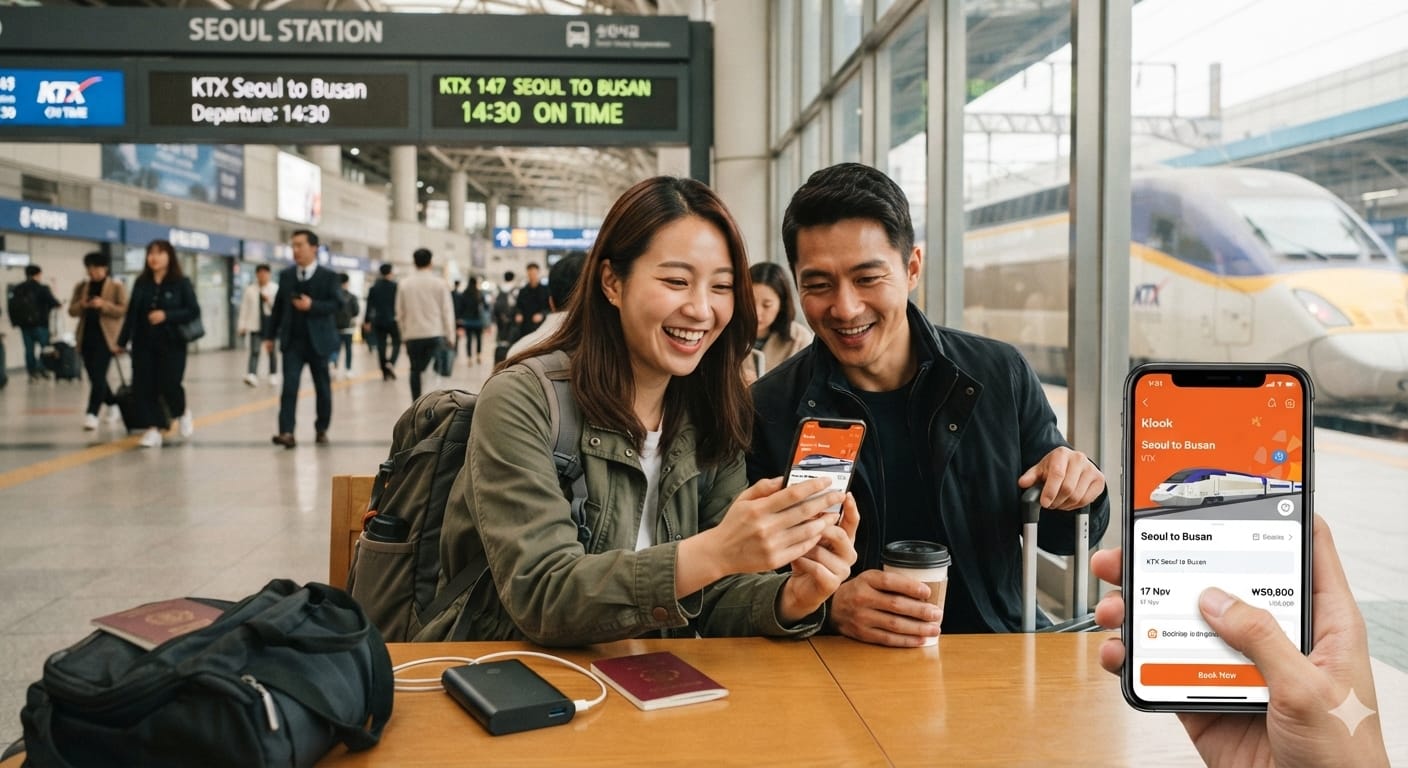
  • Seoul to Busan by KTX: How to Book Train Tickets on Klook

    Seoul to Busan by KTX: How to Book Train Tickets on Klook

    If Seoul is the beginning of your South Korea trip and Busan is next on your itinerary, the KTX train can make the journey simple and time-efficient.

    The Seoul–Busan route has direct train services, and Klook currently lists KTX and other rail options for this journey. The fastest journey shown on Klook is around 2 hours 11 minutes, although the actual duration depends on the train and departure station.

    Instead of spending time figuring out the booking process at the last minute, you can arrange your train journey online before traveling.

    Your Seoul–Busan Journey in One Look

    Think of the trip in four simple stages:

    Seoul → Choose your train → Check your e-ticket → Busan

    Klook’s Korea rail platform allows travelers to enter their departure and arrival points, select a date, compare available journeys and then book the selected option.

    Which Seoul Station Should You Choose?

    This is an important detail that travelers sometimes overlook.

    Not every Seoul-area train leaves from exactly the same station. Klook’s current Seoul–Busan timetable includes departures from Seoul Station and also services from other Seoul-area stations such as Suseo, depending on the train.

    So don’t simply search for “Seoul to Busan” and assume every departure uses the same station.

    Before confirming your ticket, check:

    • Departure station
    • Arrival station
    • Departure time
    • Train number
    • Seat information

    That small check can prevent unnecessary confusion on travel day.

    How the Klook Booking Process Works

    The process is designed around the journey rather than complicated ticket terminology.

    1. Enter Your Route

    Search for Seoul → Busan and select your travel date.

    2. Compare Available Trains

    Review the available departure times and journey durations. Klook currently shows KTX services as well as other Korean rail options on its Korea rail platform.

    3. Select Your Preferred Journey

    Choose a departure that fits your itinerary. Pay attention to the station shown before completing the booking.

    4. Complete the Booking

    Enter the required passenger information and complete payment according to the booking instructions.

    5. Keep Your E-Ticket Ready

    Klook states that its Korea train tickets can be used directly with the e-ticket, so travelers do not generally need to collect a separate physical ticket for these bookings.

    What Should You Check Before Leaving Seoul?

    A KTX journey can be straightforward, but your preparation matters.

    Check Before Boarding Why It Matters
    Train number Helps identify your exact service
    Departure station Seoul-area services may use different stations
    Departure time Avoid missing your scheduled train
    Car & seat Helps you find your place quickly
    E-ticket Keep it accessible on your phone
    Platform Confirm it on the station departure board

    Klook recommends arriving at the station at least 15 minutes before departure, then checking the station screens for the train, destination and platform.

    What About the Journey Itself?

    The Seoul–Busan route is useful for travelers who want to move between Korea’s capital and its major southern coastal city without taking a flight.

    Depending on the selected service, the journey can take roughly two-and-a-half hours or longer. Klook’s current timetable shows multiple daily departures, including early-morning services.

    This also makes it possible to plan your Busan hotel check-in, sightseeing schedule or onward transportation around your train arrival.

    A Smart Booking Tip

    Don’t choose a train based only on the lowest displayed price.

    Look at the complete journey:

    Departure station + departure time + journey duration + arrival station + seat

    A slightly later train may fit your hotel check-out or sightseeing plan much better.

    Klook also notes that final ticket prices can vary depending on availability and the selected time, so travelers should check the final checkout price before confirming.

    Is KTX Right for Your Seoul–Busan Trip?

    For travelers who want a direct rail connection between Seoul and Busan, KTX is one of the main options to consider. The route has frequent services, and online booking can make the planning process easier for international visitors.

    If your Korea itinerary includes several additional cities, you can also compare individual KTX tickets with a KORAIL Pass. Klook currently offers KORAIL Pass options covering multiple flexible travel days.

    Before You Click “Book”

    Use this quick checklist:

    ✓ Correct travel date
    ✓ Correct Seoul departure station
    ✓ Busan arrival station
    ✓ Suitable departure time
    ✓ Passenger details
    ✓ E-ticket accessible on your phone

    Once these details match your itinerary, your Seoul-to-Busan train planning becomes much easier.

    Planning More of South Korea?

    After Busan, you may want to explore Gyeongju, Daegu or other Korean destinations by rail. Keep your itinerary flexible, compare the available train options, and check the latest ticket conditions before traveling.

    For more practical flight, train and travel-booking guides, explore Nova Travel BD.

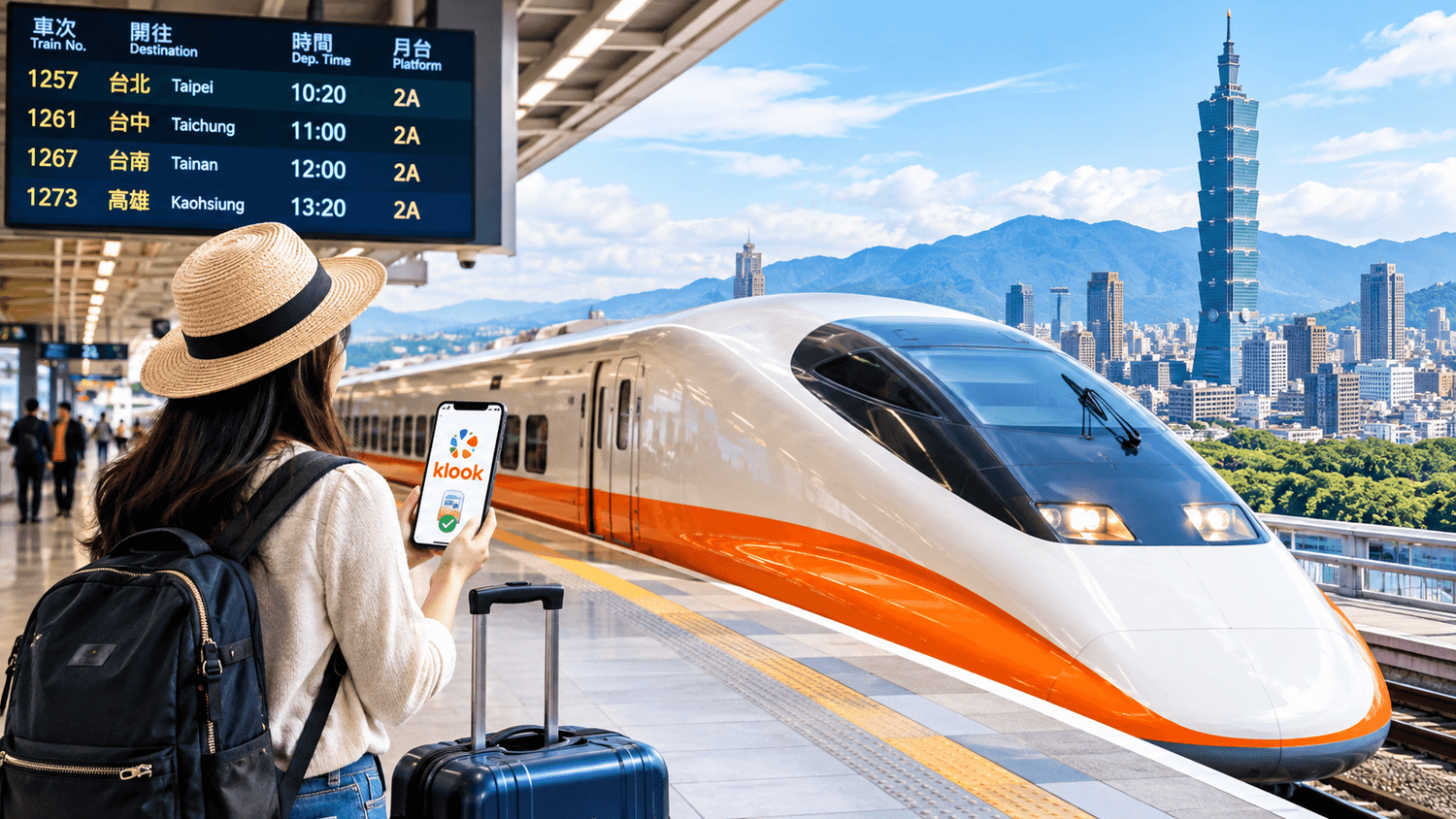
  • How to Book Taiwan High Speed Rail Tickets on Klook: Complete Guide for Travelers

    How to Book Taiwan High Speed Rail Tickets on Klook: Complete Guide for Travelers

    Planning to explore Taiwan by train? The Taiwan High Speed Rail (THSR) is one of the most convenient ways to travel between major cities such as Taipei, Taichung, Tainan and Kaohsiung. For international travelers, booking a Taiwan High Speed Rail ticket on Klook can be a convenient option when planning a trip before arriving in Taiwan.

    In this guide, we explain what to know before booking, how to choose your journey, and how to prepare for your train trip.

    Why Choose Taiwan High Speed Rail?

    Taiwan High Speed Rail connects major destinations along Taiwan’s western corridor, making it useful for travelers who want to visit more than one city during a short trip.

    For example, travelers can use high-speed rail when planning routes such as:

    • Taipei → Taichung
    • Taipei → Tainan
    • Taipei → Kaohsiung
    • Taichung → Tainan

    The official THSRC system also provides timetable, fare and ticket availability information online.

    How to Book Taiwan Train Tickets on Klook

    The booking process is generally straightforward:

    1. Search for your Taiwan train ticket
    Open Klook and search for Taiwan High Speed Rail or THSR tickets.

    2. Choose your travel option
    Select the ticket or pass that matches your itinerary. Check the route, travel date and passenger information carefully before completing the booking.

    3. Enter passenger details
    Provide the information requested during checkout and make sure the spelling matches your travel documents where required.

    4. Complete payment
    Review the booking details, price and applicable terms before making payment.

    5. Check your confirmation
    After booking, keep your confirmation information accessible on your phone. Always follow the instructions provided with your specific Klook booking regarding ticket collection, redemption or boarding.

    Popular Route Best For
    Taipei → Taichung Short city trips
    Taipei → Tainan City & cultural travel
    Taipei → Kaohsiung Long-distance travel
    Taichung → Tainan Multi-city itineraries

    Klook Ticket or Individual THSR Ticket?

    Your best option depends on your travel plan.

    Your Travel Plan Option to Consider
    One train journey Individual THSR ticket
    Several train journeys THSR Pass or suitable rail pass
    Multiple Taiwan cities High Speed Rail
    Booking before arrival Online booking

    Taiwan High Speed Rail itself offers online booking, timetable and fare-search services, while different ticket products have their own conditions.

    Important Things to Check Before Booking

    Before confirming your Taiwan train booking, check these details carefully:

    • Departure and arrival stations
    • Travel date and time
    • Passenger information
    • Ticket type
    • Cancellation or change conditions
    • Redemption or boarding instructions

    The official THSR online booking system currently allows reservations in advance, with the normal booking window opening 29 days before departure and closing shortly before the scheduled departure time. Rules can change, so check the current conditions before your journey.

    Final Tips for a Smooth Taiwan Train Journey

    If Taiwan is part of your international trip, booking your train transportation before traveling can make your itinerary easier to manage. Compare your planned routes first, then select the ticket or pass that fits your journey rather than automatically choosing the cheapest-looking option.

    For travelers visiting multiple cities, planning the train routes together with hotels, flights and airport transfers can also help create a more organized itinerary.

    Planning a Taiwan trip? Check your preferred train route and booking option before traveling, and keep your confirmation details ready for your journey.

    More Travel Guides from Nova Travel BD.

    Planning an international trip? Explore more guides from Nova Travel BD for flight booking, hotel planning, transit travel and travel transportation.

  • Self-Transfer vs Connecting Flight: What Travelers Should Know Before Booking

    Self-Transfer vs Connecting Flight: What Travelers Should Know Before Booking

    A flight with a stop can sometimes cost less than a direct journey. But not every connection works the same way.

    Some itineraries are sold as a single journey, while others require you to arrange the connection yourself. This is known as a self-transfer.

    Understanding the difference between a self-transfer and a regular connecting flight can help you avoid unexpected problems when planning an international trip.

    What Is a Self-Transfer?

    A self-transfer usually means you have separate flight tickets or bookings for different parts of your journey.

    For example:

    Dhaka → Kuala Lumpur
    Kuala Lumpur → Bangkok

    If these flights are booked separately, you may be responsible for making the connection yourself.

    Depending on the airports and ticket conditions, you may need to collect your checked baggage, go through the required airport procedures, and check in again for the next flight.

    That’s why a self-transfer should be treated differently from a normal connection.

    How Is a Regular Connecting Flight Different?

    With a regular connecting itinerary, the flights are generally arranged together under the same booking or ticket.

    For example:

    Dhaka → Doha → Paris

    The airline or booking provider handles the itinerary as one journey according to the applicable ticket conditions.

    If something goes wrong, such as a delay on the first flight, the protections and rebooking options depend on the ticket and airline’s rules.

    With a self-transfer, the responsibility can be greater because the flights may be separate bookings.

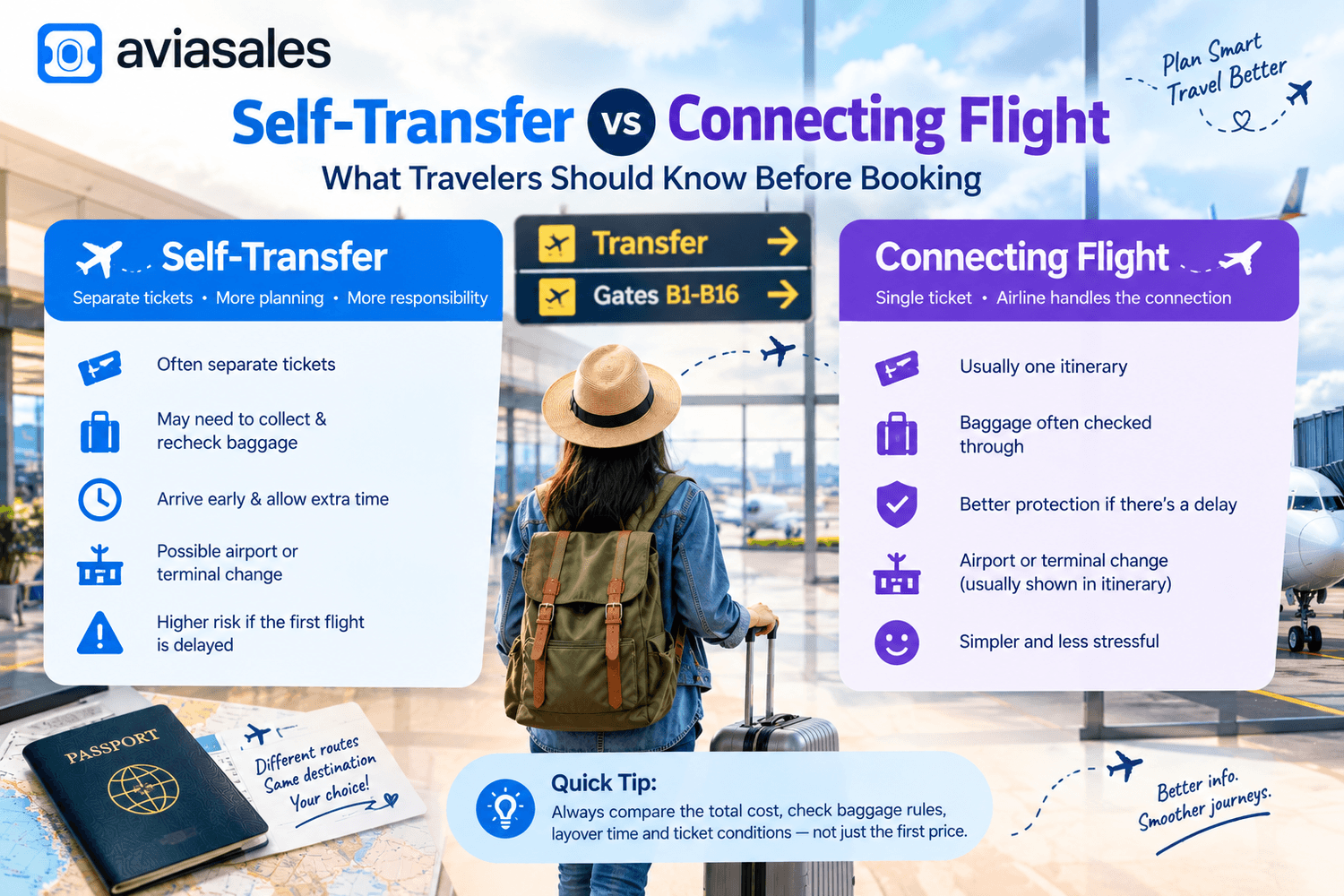
    A quick comparison

    Feature Self-Transfer Regular Connection
    Tickets Often separate Usually one itinerary
    Baggage May need re-checking May be checked through
    Missed connection More responsibility on traveler Depends on ticket conditions
    Airport change Possible Usually shown in itinerary
    Planning required Higher Usually simpler

    These are general differences. Always check the actual fare and airline conditions for your specific itinerary.

    The Biggest Thing to Check: Your Baggage

    Baggage can make a self-transfer more complicated.

    If your first flight ends and your checked bag is not transferred automatically to the next flight, you may need to collect it and check it in again.

    That can require extra time.

    Before booking, check whether your baggage will be transferred automatically or whether you will need to handle it yourself.

    If you are traveling with only carry-on luggage, the process may be simpler, but you still need to consider immigration, security, terminal changes, and check-in requirements where applicable.

    Don’t Make the Layover Too Short

    A self-transfer requires more planning than simply walking to another departure gate.

    You may need time for:

    • Immigration procedures
    • Baggage collection
    • Moving between terminals
    • Airport security
    • Finding the next check-in counter
    • Rechecking baggage
    • Possible delays on the first flight

    For that reason, a very short connection can create unnecessary pressure.

    A longer buffer may make the journey more manageable, especially when you are unfamiliar with the airport.

    What Happens If the First Flight Is Delayed?

    This is one of the most important differences.

    Imagine you have two separate tickets:

    Flight 1: Dhaka → Kuala Lumpur
    Flight 2: Kuala Lumpur → Singapore

    If Flight 1 is delayed and you miss Flight 2, the second ticket may have its own rules. You may need to contact the relevant airline or booking provider and arrange another flight yourself.

    With a single itinerary, missed-connection handling may work differently under the ticket’s conditions.

    So don’t compare self-transfer options based only on the lowest price.

    When Can Self-Transfer Be Useful?

    Self-transfer can be worth considering when the price difference is significant or when separate flights create a route that is not available as a convenient single itinerary.

    It can also be useful for travelers who are comfortable with extra planning and have enough time between flights.

    However, a cheaper itinerary is not automatically a better itinerary.

    Consider the total cost, including baggage, airport transportation, possible overnight stays, and other additional expenses.

    A Simple Example

    Suppose you find two options:

    Option A: One itinerary for $420
    Option B: Self-transfer for $350

    At first, Option B looks cheaper by $70.

    But then you discover that the self-transfer requires extra baggage fees and a longer airport wait.

    The actual difference may become much smaller.

    This is why comparing the complete journey is more useful than comparing only the initial airfare.

    How to Research Self-Transfer Options

    When using Aviasales or another flight-search platform, pay attention to the complete itinerary rather than just the price.

    Check:

    Flights → Airports → Layover → Tickets → Baggage → Total cost → Booking conditions

    If the flights are separate, make sure you understand what responsibility you have for making the connection.

    Also check whether you need to change airports or terminals during the journey.

    Before Booking a Self-Transfer

    Use this quick checklist:

    • Are the flights on separate tickets?
    • Do you need to collect your baggage?
    • Will you need to check in again?
    • Are the airports or terminals different?
    • Is the layover long enough?
    • What happens if the first flight is delayed?
    • Are there additional baggage or airport costs?
    • Do you need to meet any entry or transit requirements?

    These details can make a significant difference to the practicality of the itinerary.

    Final Takeaway

    Self-transfer flights can create interesting travel options, but they require more attention than a standard connecting itinerary.

    Before booking, look beyond the airfare. Check baggage, airports, layover time, separate-ticket conditions, and what could happen if the first flight is delayed.

    A slightly more expensive single itinerary may offer a simpler journey, while a self-transfer may suit travelers who are comfortable managing their own connection.

    The key is to understand the itinerary before you book it.