Choosing the best flight is not always about finding the cheapest ticket. A flight with a low price may include long layovers, limited baggage, strict refund rules, or inconvenient departure times.
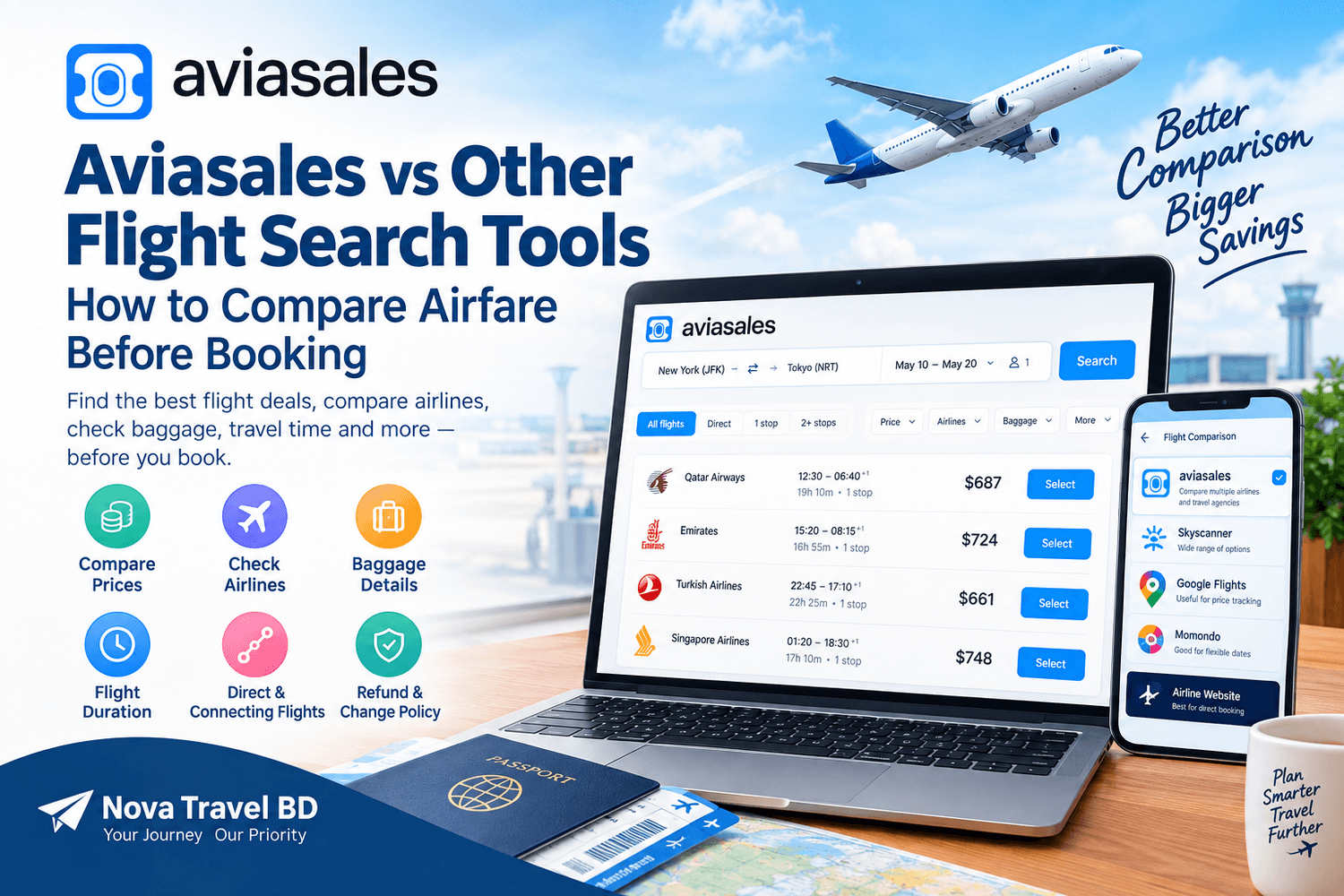
Before booking your next trip, it is important to compare the complete flight details. With flight comparison platforms such as Aviasales, travelers can explore different airlines, routes, ticket prices, and travel schedules.
In this guide, Nova Travel BD explains how to choose the best flight by comparing airfare, flight duration, layovers, baggage allowance, and ticket conditions.
What Does “Best Flight” Really Mean?
The best flight depends on your travel needs, budget, destination, and schedule.
For one traveler, the best option may be the cheapest available ticket. For another traveler, a direct flight with checked baggage and flexible cancellation may be more suitable.
When choosing a flight, consider:
- Total ticket price
- Flight duration
- Number of stops
- Departure and arrival time
- Baggage allowance
- Refund and change policy
- Transit requirements
- Airport location
- Airline reputation
- Booking provider
A good flight should offer a balance between price, convenience, and travel conditions.
Direct Flights vs Connecting Flights
One of the first decisions you need to make is whether to choose a direct flight or a connecting flight.
What Is a Direct Flight?
A direct flight takes you from the departure airport to the destination without changing planes at another airport.
Direct flights are often convenient because they usually offer:
- Shorter travel time
- Fewer airport procedures
- Less risk of missed connections
- Easier travel with children or elderly passengers
- Less baggage-transfer stress
However, direct flights may cost more than connecting flights, depending on the route and travel date.
What Is a Connecting Flight?
A connecting flight requires you to stop at one or more airports before reaching your final destination.
Connecting flights may offer:
- Lower ticket prices
- More route options
- Better availability
- Different airline combinations
- Flexible travel schedules
However, they may also involve:
- Longer journey times
- Multiple security checks
- Baggage transfer issues
- Transit visa requirements
- Risk of missed connections
- Airport changes
Before choosing a connecting flight, carefully check the total journey duration and connection conditions.
How to Choose the Right Layover Time
A layover is the time between two flights at a connecting airport.
A very short layover may be stressful, while a very long layover can make your journey tiring.
Short Layovers
Short layovers can save time, but they may be risky if:
- The first flight is delayed
- You need to change terminals
- You must pass immigration or security
- The airport is large
- You need to collect and recheck baggage
Always check the minimum connection time and airport transfer instructions.
Long Layovers
Long layovers provide more time between flights. They may be useful if you want to reduce the risk of missing your connection.
However, long layovers can involve:
- Extra waiting time
- Food and airport expenses
- Hotel costs
- Fatigue
- Additional visa requirements
For international travel, choose a layover that gives you enough time without making the journey unnecessarily difficult.
Check the Total Flight Duration
When comparing flights, do not look only at the departure and arrival times. Check the full journey duration shown in the flight details.
For example:
- Flight A may cost less but take 22 hours
- Flight B may cost slightly more but take 13 hours
- Flight C may be direct but have a higher ticket price
The best option depends on your budget and how much time you have.
If you are traveling for an important event, business meeting, examination, or family occasion, a shorter journey may be more practical.
Understand Baggage Allowance
Baggage allowance is one of the most important details to check before booking.
Some basic fares may include only a small cabin bag. Checked baggage may require an additional payment.
Before confirming your ticket, check:
- Cabin baggage allowance
- Checked baggage allowance
- Maximum baggage weight
- Number of allowed bags
- Extra baggage charges
- Laptop and personal item rules
- Sports equipment conditions
- Special baggage restrictions
A ticket that looks cheap may become more expensive after adding checked baggage.
Always compare the final travel cost, including any baggage fees.
Basic Fare vs Flexible Fare
Airlines may offer different ticket types for the same route.
Basic Fare
A basic fare is often designed for travelers who want the lowest available price.
It may include:
- Limited baggage
- No free seat selection
- Strict change rules
- Limited refund options
- Additional charges for extra services
Standard Fare
A standard fare may include more services than a basic ticket. Depending on the airline, it may offer better baggage allowance or more flexible conditions.
Flexible Fare
A flexible fare may be useful for travelers whose plans can change.
It may include:
- Easier date changes
- Lower change fees
- Better refund conditions
- Additional baggage
- More seat-selection options
The exact benefits depend on the airline and fare rules. Always read the conditions before payment.
Refundable vs Non-Refundable Tickets
A refundable ticket may allow you to receive money back if you cancel, subject to the fare rules.
A non-refundable ticket may not provide a full refund if you cancel your trip. Some tickets may allow changes or travel credit instead.
Before booking, ask yourself:
- Could my travel date change?
- Is the trip connected to an important event?
- Do I need cancellation flexibility?
- Can I afford to lose the ticket price?
- Does the ticket allow date changes?
If your plans are uncertain, a more flexible ticket may be worth considering even if the initial price is higher.
Check the Departure and Arrival Airports
Some cities have more than one airport. A flight may arrive at an airport far from the city center or your hotel.
Before booking, check:
- Airport name
- Airport code
- Distance from your destination
- Airport transfer cost
- Public transportation options
- Terminal information
- Overnight arrival arrangements
Choosing the wrong airport can create extra transportation costs and travel difficulties.
Review Transit Visa Requirements
Some connecting routes may require a transit visa, depending on your nationality, passport, airport, and whether you leave the transit area.
Before booking a connecting flight, check:
- Transit country
- Airport transfer rules
- Visa requirements
- Whether you need to collect baggage
- Whether you must pass immigration
- Whether the connection uses separate tickets
Do not assume that every airport connection is visa-free. Verify the requirements through the relevant official authorities or airline before payment.
Single Ticket vs Separate Tickets
A single-ticket itinerary is generally issued as one booking covering the connected flights.
Separate tickets mean that you book each flight independently.
Single Ticket
Possible advantages include:
- Easier connection management
- Better protection for certain missed connections
- Baggage transfer may be simpler
- One booking reference
Separate Tickets
Separate tickets may sometimes offer lower prices, but they can involve additional risks.
If the first flight is delayed, the airline operating the second flight may not be responsible for your missed connection.
You may also need to:
- Collect your baggage
- Check in again
- Pass immigration
- Obtain a transit visa
- Pay for a new ticket if you miss the flight
For important international journeys, carefully review the risks before choosing separate tickets.
How Aviasales Can Help You Compare Flights
Aviasales can help travelers explore flight options from different airlines and booking providers. You can use flight search results to compare:
- Ticket prices
- Airlines
- Departure times
- Arrival times
- Direct and connecting flights
- Journey duration
- Different travel dates
- Available booking options
After selecting a flight, review the final booking provider and ticket conditions before making payment.
Use the search results as a starting point, but always confirm the final price, baggage, refund rules, and passenger information before completing your booking.
Best Flight Choices for Different Travelers
For Budget Travelers
Budget travelers may prefer a lower ticket price, but they should still check baggage fees, layover duration, and the final cost.
For Families
Families may prefer direct flights, convenient departure times, and baggage-inclusive fares. A shorter journey may be more comfortable for children.
For Business Travelers
Business travelers may value shorter travel time, flexible tickets, convenient schedules, and reliable connections.
For Elderly Travelers
Elderly passengers may benefit from fewer connections, shorter walking distances, airport assistance, and convenient flight times.
For First-Time International Travelers
First-time travelers may prefer a single-ticket itinerary, a manageable layover, clear airport instructions, and reliable customer support.
Flight Booking Checklist
Before confirming your flight, check the following:
- Passenger name spelling
- Passport details
- Departure and arrival airports
- Travel date and time
- Total journey duration
- Number of stops
- Layover time
- Baggage allowance
- Total ticket price
- Refund and change policy
- Transit visa requirements
- Booking provider
- Payment currency
- Confirmation email
- Booking reference number
Save your ticket and payment receipt after completing the booking.
Common Mistakes to Avoid
Choosing Only by Price
The cheapest flight may not provide the best overall value.
Ignoring Baggage Rules
Extra baggage charges can increase the final ticket cost.
Booking a Risky Connection
A very short layover or airport change can create connection problems.
Forgetting Transit Requirements
Always check whether a transit visa or airport transfer permission is required.
Entering Incorrect Passenger Information
Incorrect names or passport details may cause check-in and ticket problems.
Not Reading Fare Conditions
Refund, cancellation, and date-change rules vary by ticket type.
Frequently Asked Questions
Is a direct flight always better?
Not necessarily. Direct flights are usually more convenient, but a connecting flight may offer a lower price or better schedule.
How much layover time should I choose?
The ideal layover depends on the airport, route, immigration process, terminal changes, and baggage rules. Choose enough time to make the connection comfortably.
Is baggage included in every international flight ticket?
No. Baggage allowance depends on the airline, route, and fare type. Always check the baggage conditions before booking.
Are flexible tickets worth the extra cost?
Flexible tickets may be useful if your travel plans can change. Compare the additional cost with the possible change or cancellation fees.
Should I book separate connecting flights?
Separate tickets may offer lower prices, but they can create risks if the first flight is delayed. Review the connection, baggage, and visa requirements carefully.
Can Aviasales compare different flight options?
Yes. Aviasales helps travelers search and compare available flight options, airlines, routes, prices, and travel dates.
Final Thoughts
Choosing the best flight requires more than finding the lowest ticket price. You should compare flight duration, layover time, baggage allowance, fare rules, airport details, and transit requirements before booking.
Aviasales can help you explore different flight options and compare airfare. However, always review the final booking conditions on the airline or booking provider’s website.
By planning carefully and checking every important detail, you can choose a flight that matches your budget, schedule, and travel needs.
Follow Nova Travel BD for more flight booking guides, international travel tips, and smart trip-planning advice.