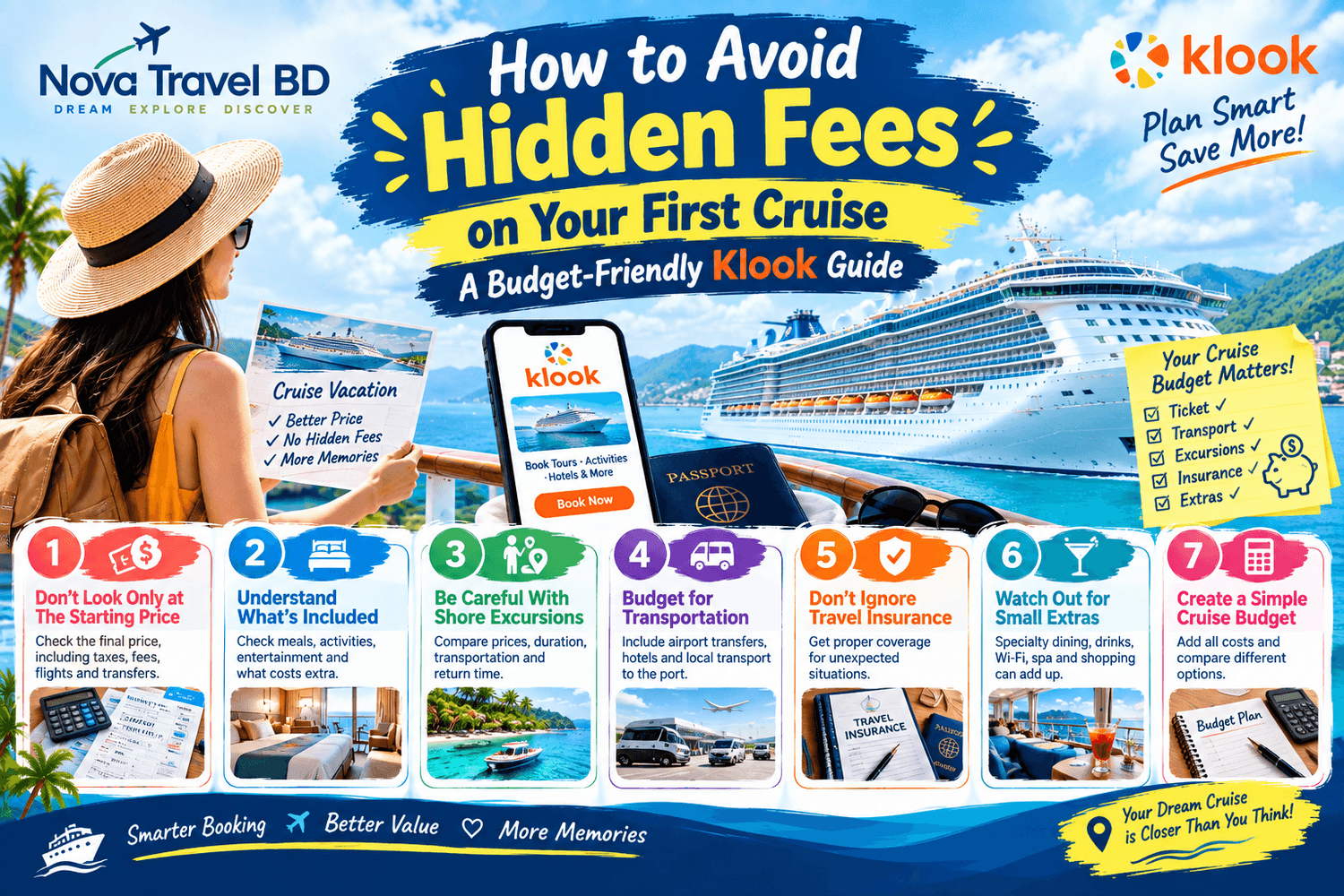
Booking a cruise can seem simple: choose a ship, select a cabin, and pay for your ticket. But first-time travelers often discover that the cruise fare is only part of the total vacation cost.
From transportation and shore excursions to onboard extras, several expenses can affect your final budget.
The good news? With a little planning, you can avoid many unexpected cruise costs.
Here is a practical Klook cruise booking guide to help you plan your first cruise with a clearer budget.
1. Don’t Look Only at the Starting Cruise Price
A cruise advertisement may show an attractive starting fare, but that price may not represent your complete travel cost.
Before booking, consider:
- Cruise fare
- Port taxes or applicable charges
- Flights or other transportation
- Hotel before or after the cruise
- Shore excursions
- Transfers
- Travel insurance
- Optional onboard services
Always check the booking details and final checkout amount carefully.
2. Understand What’s Included
Different cruise packages can include different services.
Depending on the cruise, your fare may cover certain meals, entertainment, and onboard activities, while other services may cost extra.
Before paying, check what your ticket actually includes.
This simple step can prevent disappointment when you board the ship.
3. Be Careful With Shore Excursions
Shore excursions can make a cruise much more memorable, but booking several activities can quickly increase your spending.
Before choosing an excursion, consider:
Price + duration + transportation + location + return time
If you are using Klook to find activities at your destination, compare the activity details and cancellation conditions before booking.
You don’t need an expensive tour at every port. Sometimes a simple sightseeing plan can provide excellent value.
4. Budget for Transportation
Your cruise may depart from Singapore, Kuala Lumpur, Hong Kong, or another major port.
Getting to the port can create additional expenses.
For example, your budget may need to include:
- Airport-to-hotel transportation
- Hotel-to-port transfer
- Local taxis or public transport
- Return transportation after the cruise
If your cruise departs early, arriving in the city one day before departure may also require a hotel night.
Planning these costs before booking helps you avoid last-minute transportation expenses.
5. Don’t Ignore Travel Insurance
Travel insurance is another cost that travelers sometimes forget when creating a cruise budget.
Cruises involve multiple parts of a trip—flights, hotels, transportation, and the cruise itself.
The right travel insurance may provide protection for eligible unexpected situations, depending on the policy.
Compare coverage carefully rather than choosing a policy based only on price.
6. Watch Out for Small Extras
Small purchases can add up during a cruise.
Depending on the ship and package, travelers may spend extra on things such as:
- Specialty dining
- Premium beverages
- Internet packages
- Spa treatments
- Photos
- Certain activities
- Shopping
- Additional excursions
You don’t have to avoid everything. Simply decide what is important to you before the trip.
A small daily spending limit can help keep your cruise budget under control.
7. Create a Simple Cruise Budget
Before booking, make a quick calculation:
Cruise fare
- Transportation
- Hotel
- Excursions
- Insurance
- Optional extras
= Estimated total trip cost
This gives you a much more realistic idea of what your vacation will actually cost.
It also makes it easier to compare two different cruise options.
A Simple Example
Imagine two cruises have similar ticket prices.
Cruise A may have a cheaper starting fare but require more spending on transportation and activities.
Cruise B may cost slightly more upfront but offer a better itinerary or more convenient departure location.
Instead of automatically choosing Cruise A, compare the total vacation cost.
The cheapest ticket isn’t always the cheapest trip.
Smart Klook Booking Checklist
Before confirming your cruise-related bookings:
✓ Check the final price
✓ Read what is included
✓ Review cancellation conditions
✓ Compare excursion prices
✓ Calculate transportation costs
✓ Consider hotel requirements
✓ Check travel insurance options
✓ Set a budget for onboard extras
✓ Keep some emergency travel money available
Final Thoughts
A first cruise doesn’t have to become an expensive surprise.
The key is understanding the difference between the advertised cruise fare and your total vacation budget.
By checking inclusions, comparing activities, planning transportation, and controlling optional spending, you can enjoy a smoother and more affordable cruise vacation.
Whether you’re planning a Singapore cruise, Southeast Asia cruise, or a family cruise, smart budgeting before departure can help you spend less time worrying about costs and more time enjoying the journey.
Leave a Reply